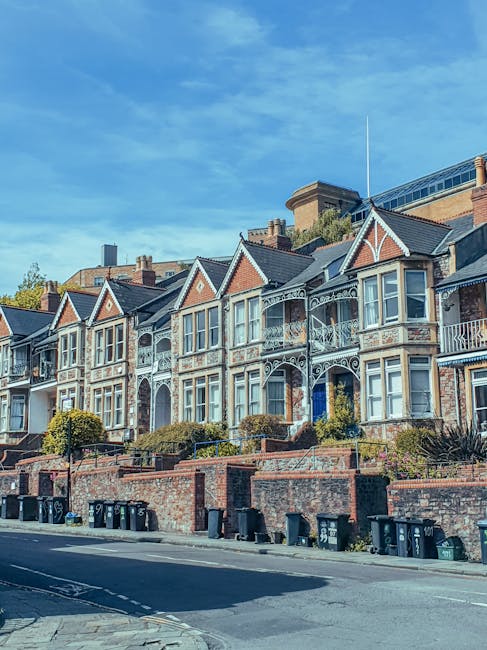
W13 West Ealing movers for Victorian terrace moves
If you are planning a move in W13, you already know Victorian terrace homes can be charming and slightly awkward in equal measure. Narrow hallways, steep stairs, tight front steps, awkward landings, and parking that seems to vanish five minutes before the van arrives - it all adds up. That is exactly why choosing the right W13 West Ealing movers for Victorian terrace moves matters. A good removals team does not just lift boxes. They read the property, plan the approach, protect the fabric of the house, and keep the day moving without the little disasters that make a move feel twice as long as it should.
This guide breaks down what makes terrace moves different, how a professional move should work, what to watch out for, and how to prepare so the day is smoother from the first box to the last kettle. If you want a broader look at domestic moving support, it may also help to explore home moves, house removals, and packing and boxes for the practical side of the job.
Why W13 West Ealing movers for Victorian terrace moves Matters
Victorian terraces in West Ealing come with character, but they also come with moving-day friction. The houses were built long before modern furniture, American-style wardrobes, or huge corner sofas became the norm. Doors can be narrower than you expect. Stairs can twist. Cellars and loft rooms can be useful, but they are not exactly friendly to bulky items. And the front path? Often just wide enough for one person to stand aside, not much more.
That is why local knowledge counts. W13 West Ealing movers for Victorian terrace moves are used to the sort of details that catch people out: how close the vehicle can get to the property, whether the ground floor furniture needs dismantling first, and how to move items through a house without scuffing painted banisters or scraping plaster corners. These are not small things. On the day, they are everything.
There is also the timing side. Terrace streets can be busier than expected, especially around school runs and the usual morning rush. A crew that understands the local rhythm can plan loading more sensibly, which saves you a lot of unnecessary shuttling. Truth be told, that is often the difference between a calm move and a day that feels like it is constantly one step behind.
Expert summary: Victorian terrace moves work best when the removals team plans around access, protection, parking, and item size before they even arrive. The move itself should feel organised, not improvised.
How W13 West Ealing movers for Victorian terrace moves Works
A well-run terrace move usually starts before moving day. The mover should ask about the number of floors, the width of the stairs, whether there is a basement or loft room, and what the biggest items are. You might be surprised how often this conversation gets skipped, but it matters. A large wardrobe can be easy in one home and a complete headache in another.
Here is the typical flow:
- Access review: The mover learns about the road, the entrance, stairs, and any restrictions on parking or loading.
- Item assessment: Large, heavy, fragile, or awkward pieces are identified early. Sofas, wardrobes, mirrors, beds, and pianos need extra thought.
- Packing plan: Boxes are grouped by room, fragiles are protected, and essential items are separated for quick access.
- Protection setup: Blankets, wraps, tape, and floor protection are used where needed to reduce damage risk.
- Loading sequence: Furniture and boxes are loaded in a sensible order so the van can be unpacked efficiently at the other end.
- Delivery and placement: Items are taken to the right rooms, and reassembly happens where agreed.
That sounds straightforward, and on paper it is. In practice, the little details matter: a banister wrap that saves a paint job, a quick dismantle that prevents a wardrobe from getting stuck halfway down the stairs, or a careful pause while someone calls out that the hallway mirror is coming through. Those moments are what a thoughtful removals team manages without drama.
If you want a service that can adapt to smaller or more flexible loads, a man and van or removal van may suit lighter terrace moves. For larger family homes or multiple floors of belongings, a more full-service approach through removal services is often the safer bet.
Key Benefits and Practical Advantages
The main advantage of using experienced movers for a Victorian terrace is not just speed. It is control. A move that is controlled tends to be cheaper in the long run because fewer things get damaged, fewer items need to be moved twice, and fewer last-minute problems appear. Nice in theory, but also very real.
- Better protection for the property: Victorian interiors often have more delicate finishes, tighter corners, and older features that need care.
- Less physical strain for you: Steep stairs and heavy furniture are a recipe for back pain if you try to do too much yourself.
- Improved timing: A prepared team can load and unload more efficiently, especially where access is awkward.
- Reduced stress: When everyone knows the plan, the move feels less chaotic. And yes, that really changes the day.
- Flexible vehicle choice: Sometimes a compact van is better than a large truck if the road is narrow or parking is tight.
There is another practical benefit people overlook: better sequencing of the household. In a terrace move, you often want to move the largest items first, then fragile boxes, then day-to-day essentials last. Good movers understand that the order matters because once a staircase is blocked by one bulky item, everything slows down. Suddenly the hall is full, someone's coat is on a chair, the dog is in the way, and the day feels longer. You know the picture.
For some households, temporary storage can also make the move easier, especially if the new home is not ready for everything at once. In that case, storage can bridge the gap neatly. And if you are moving into or out of a flat as part of a terrace conversion or split property, flat removals may be the closest fit.
Who This Is For and When It Makes Sense
This kind of service makes sense for anyone moving in or out of a period terrace where access is not generous and the contents are more awkward than average. That could be a couple moving from a two-up, two-down, a growing family shifting out of a larger terrace with loft rooms, or someone downsizing after many years in one home.
It is also a smart option if you are moving from a terrace where the furniture has to be taken downstairs carefully, through narrow hallways with sharp turns, or across a small front garden path. If the move includes a piano, antique cabinet, or oversized dining table, specialised handling is even more important. In those situations, piano removals or careful furniture removals may be needed alongside standard house moving support.
You should also think in terms of timing and life stage:
- Families: Often need a full household move, school-run timing awareness, and careful box labelling.
- Young professionals: May want a smaller, quicker move with minimal disruption.
- Landlords and sellers: Need predictable handover timing and a tidy property at the end.
- People between homes: May need short-term holding space and staged delivery.
- Students or first-time renters: May only need a lighter, simpler service, possibly even student removals.
If your move involves a business base or a work-from-home setup with office equipment, it may be worth reviewing office removals or commercial moves too. Sometimes a home move has a surprisingly commercial amount of gear. Laptops, monitors, printers, files... it adds up fast.
Step-by-Step Guidance
The easiest moves are the ones where the plan is made early and kept simple. Here is a practical route you can follow.
- Walk through the property with a critical eye. Measure doorways, check stair turns, and note anything that looks like a pinch point. A quick tape measure session can save a lot of grief.
- List the awkward items first. Beds, wardrobes, sofas, mirrors, lamps, and anything fragile should be identified before the rest of the packing starts.
- Decide what you will take apart. Some furniture is simply easier and safer when dismantled. Do not try to be heroic with a headboard that will clearly not fit. It rarely ends well.
- Book the right vehicle and team size. For lighter loads, a man with van style service may be enough. For larger homes, a bigger crew and vehicle may be the more efficient choice.
- Pack by room and label properly. Clear labels help the movers place boxes faster and help you find essentials later. The kettle, chargers, toiletries, and bedding deserve special treatment.
- Prepare access at both ends. Reserve space where possible, move cars in advance, and make sure the route from the van to the front door is clear.
- Protect fragile features. Corners, bannisters, and flooring may need wrapping or covering if the property is especially tight.
- Keep a first-night box separate. This box should hold the things you absolutely need when the moving chaos is over.
One small thing that helps more than people expect: keep your phone charged. Sounds obvious, but on moving day there is always a moment when someone needs a key, a code, a message, or a quick decision. If the battery is dying by 11:30 a.m., everything gets a bit sillier than it needs to be.
Expert Tips for Better Results
After many house moves, the same patterns keep showing up. The best outcomes come from a few disciplined habits, not from last-minute rushing.
- Disassemble early, not on the doorstep. If a bed frame is going to be dismantled, do it the day before where possible.
- Use stronger boxes for heavier items. Books in weak boxes are a classic mistake. They become little bricks.
- Protect the staircase first. In a Victorian terrace, stairs often do the most work on moving day. Keep them clear and protected.
- Tell the mover about awkward access honestly. A narrow alley, split-level entrance, or low wall is not a problem if they know about it in advance.
- Have one person in charge of decisions. Too many voices slows the day and leads to confusion. A single point of contact keeps things calm.
- Keep snacks and water available. Not glamorous, but it helps. People think clearer when they are not running on fumes.
If you are comparing providers, look beyond the headline price. Review how they talk about protection, access planning, and moving-day support. A company that explains its process clearly is usually easier to trust. You can also check practical details such as pricing and quotes, insurance and safety, and health and safety policy before you commit.
To be fair, every move has its odd little curveballs. A tenant still finishing packing. A bed that refuses to come apart. A key that is not where anyone thought it was. The point is not perfection. The point is having a team that knows how to absorb the surprise without letting it spill into the whole day.
Common Mistakes to Avoid
Victorian terrace moves tend to punish assumptions. The same handful of mistakes keep showing up, and almost all of them are avoidable.
- Underestimating furniture size: If it barely fit in the old house, it may not fit through the new one either.
- Ignoring stair geometry: A turn on the landing can be more difficult than the stairs themselves.
- Leaving packing too late: Late packing tends to mean weaker boxes, worse labels, and more stress.
- Assuming parking will sort itself out: It often does not. Especially not when two other vans have the same idea.
- Forgetting the fragile items: Mirrors, glass shelves, artwork, and lamps need a separate plan.
- Choosing the wrong service level: A small move does not always need a full truck, but a big family move is rarely wise with a tiny van.
One of the biggest mistakes is trying to save a little money on the vehicle and then paying for it in time, stress, or multiple trips. Sometimes a smaller service is exactly right; other times it becomes false economy. That balance is worth thinking through properly.
Tools, Resources and Recommendations
You do not need a cupboard full of moving gadgets. You need a sensible set of basics and a decent plan. Here is what usually helps most.
| Tool or resource | What it helps with | Why it matters in a Victorian terrace |
|---|---|---|
| Strong boxes | Safe packing and stacking | Better for stairs, corners, and repeated lifting |
| Labels and marker pens | Room-by-room organisation | Makes quick placement easier when rooms are tight |
| Furniture blankets and wraps | Surface protection | Helps prevent scuffs on old woodwork and paint |
| Measuring tape | Doorway and furniture checks | Useful before committing to dismantling or repositioning |
| First-night box | Essential items after arrival | Lets you function even if half the house is still packed |
For services and planning support, these pages are especially useful when building your move around the property itself: packing and unpacking services, removals, and removal companies. If you are trying to work out whether a larger vehicle or a hire arrangement is better for you, look at removal truck hire and moving truck as part of your comparison.
My honest recommendation? Keep the system boring. Same labels, same room order, same plan for essentials. Boring is good on moving day. Boring means predictable.
Law, Compliance, Standards, or Best Practice
For a domestic move, the main compliance issues are practical rather than dramatic: safety, insurance, handling, and fair dealing. You are not generally dealing with heavy regulatory complexity as a homeowner, but you should still expect professional standards.
That means a mover should be clear about what is included, how items are protected, and how damages or complaints are handled if something goes wrong. Written terms are helpful. So is a proper conversation about access, parking, and any high-risk items. If the moving team has a safety policy and insurance information available, that is a reassuring sign. Not a guarantee of perfection, of course, but a sensible marker.
Best practice in this context usually includes:
- clear quoting and scope confirmation;
- appropriate handling of fragile and valuable items;
- safe lifting and loading practices;
- respect for the property and surrounding area;
- transparent communication if the plan changes;
- reasonable complaint handling where needed.
You may also want to review company policies around terms and conditions, payment and security, and privacy policy. Those are the unglamorous pages, sure, but they tell you a lot about how a business is run.
Options, Methods, or Comparison Table
Not every terrace move needs the same setup. Here is a simple comparison to help you decide what fits.
| Option | Best for | Strengths | Trade-offs |
|---|---|---|---|
| Man and van | Small moves, a few rooms, lighter loads | Flexible, often quicker to arrange, good for compact access | Less suitable for large furniture volumes or multi-floor households |
| Full house removals | Family homes, larger terraces, mixed furniture | More capacity, better for structured loading and protection | Usually needs more planning and coordination |
| Van hire or truck hire | Self-managed moves with a confident organiser | Can be cost-effective if you have help and time | You carry the responsibility for lifting, timing, and protection |
| Storage-supported move | Delayed completions, staged moving, renovation gaps | Reduces pressure when dates do not line up neatly | Needs extra handling and may add another step |
There is no single "best" option. The right choice depends on the size of the property, the shape of the access, and how much work you want to carry yourself. For many Victorian terraces in W13, a mid-sized professional approach is the sweet spot - enough capacity to keep things moving, but not so large that the van itself becomes a parking problem.
Case Study or Real-World Example
Here is a realistic example, without turning it into a glossy success story. A couple moved from a first-floor Victorian terrace in West Ealing into another period home a few streets away. The old property had a narrow hallway, a tight stair turn, and a large wardrobe that had been assembled in place years earlier. Classic situation.
Before moving day, the main issues were identified: the wardrobe needed dismantling, the mirror in the bedroom was fragile, and the front access on the new street was tighter than expected. The movers planned for a smaller vehicle that could park closer to the property, used protection on the stair rail, and set aside the fragile items separately. The couple had packed a first-night box with bedding, toiletries, chargers, tea, and a few tools. Sensible. Very sensible.
The result was not magical, just well managed. There were still a couple of awkward pauses - there always are - but nothing major blocked the day. The move felt steady, and the homeowners were able to start unpacking that evening instead of hunting for essentials in a mountain of mixed boxes. That is the point, really. Not perfection. Just a move that does not take over your life for a week.
Practical Checklist
Use this checklist a day or two before the move. It is simple, but it catches a lot of preventable problems.
- Confirm the move date, arrival time, and contact details.
- Measure the largest furniture pieces and the tightest doorways.
- Decide what needs dismantling and who will do it.
- Label boxes by room and note fragile contents clearly.
- Pack an essentials box for the first night.
- Reserve parking or check the loading arrangement where possible.
- Clear hallways, stairs, and front steps.
- Protect floors, bannisters, and delicate corners.
- Set aside valuables, documents, and keys separately.
- Tell the movers about any access issues, awkward items, or special instructions.
One final practical note: if you are moving out of a terrace and into a smaller place, think early about what stays, what goes, and what may need disposal or collection. Services like furniture pick up can help when you need to clear bulky items responsibly rather than dragging them through the next home as well.
Conclusion
Victorian terrace moves in W13 are all about fitting a modern move into a period property that was never designed for one. That is why the best W13 West Ealing movers for Victorian terrace moves do more than carry furniture. They understand access, protect the home, plan around the street, and keep the day calm enough that you can actually think straight.
If you prepare well, choose the right moving support, and give attention to the awkward details early, the whole process becomes much more manageable. A terrace move will probably never be effortless. But it can be organised, safe, and surprisingly smooth. And honestly, that is a pretty good result.
Get a free quote today and see how much you can save.
When the boxes are finally in the right rooms and the kettle is on, the house starts to feel like yours again. That moment is worth planning for.
Frequently Asked Questions
What makes Victorian terrace moves in W13 more difficult than standard house moves?
Usually it is the combination of narrow stairs, tighter hallways, older layouts, and awkward front access. Those features make planning more important than brute force.
Do I need specialist movers for a Victorian terrace?
Not always, but you do need movers who understand access, protection, and furniture handling. If you have large or fragile items, specialist experience helps a lot.
Is a man and van service enough for a small terrace move?
It can be, especially if the move is light and the property access is straightforward. For larger households, a fuller removals service is often the safer choice.
How early should I book W13 West Ealing movers for Victorian terrace moves?
As early as you can once your moving date looks firm. Period homes can need more planning, so leaving it to the last minute is rarely helpful.
Should I dismantle furniture before moving day?
Yes, if it is bulky or likely to catch on stairs and doors. Dismantling early reduces delay and lowers the risk of damage.
Can movers help with packing as well as transport?
Yes, many moves work better when packing support is included. If you want help with the practical side, packing and unpacking services can take a lot of pressure off the day.
What if the street outside my terrace is hard to park on?
That is a common issue, and it should be discussed in advance. The team may choose a different vehicle setup or loading plan depending on the road.
Are my belongings insured during the move?
That depends on the provider and the service terms. Always check the mover's insurance and safety information before booking so you know where you stand.
What should I put in a first-night box?
Include bedding, toiletries, chargers, snacks, tea or coffee, a change of clothes, basic tools, medication, and important documents. Keep it easy to reach.
Can storage help if my dates do not line up?
Yes. If completion dates, keys, or refurbishment timing are not aligned, storage can make the move much less stressful.
How do I avoid damaging the stairs or bannisters?
Use proper protection, clear the route, and make sure movers know exactly where the tight spots are. Victorian staircases deserve a bit of respect. They have a way of fighting back otherwise.
What is the best type of moving service for a family in a Victorian terrace?
Most families benefit from a structured house move with enough capacity to handle furniture, boxes, and fragile items in one organised run rather than several improvised trips.